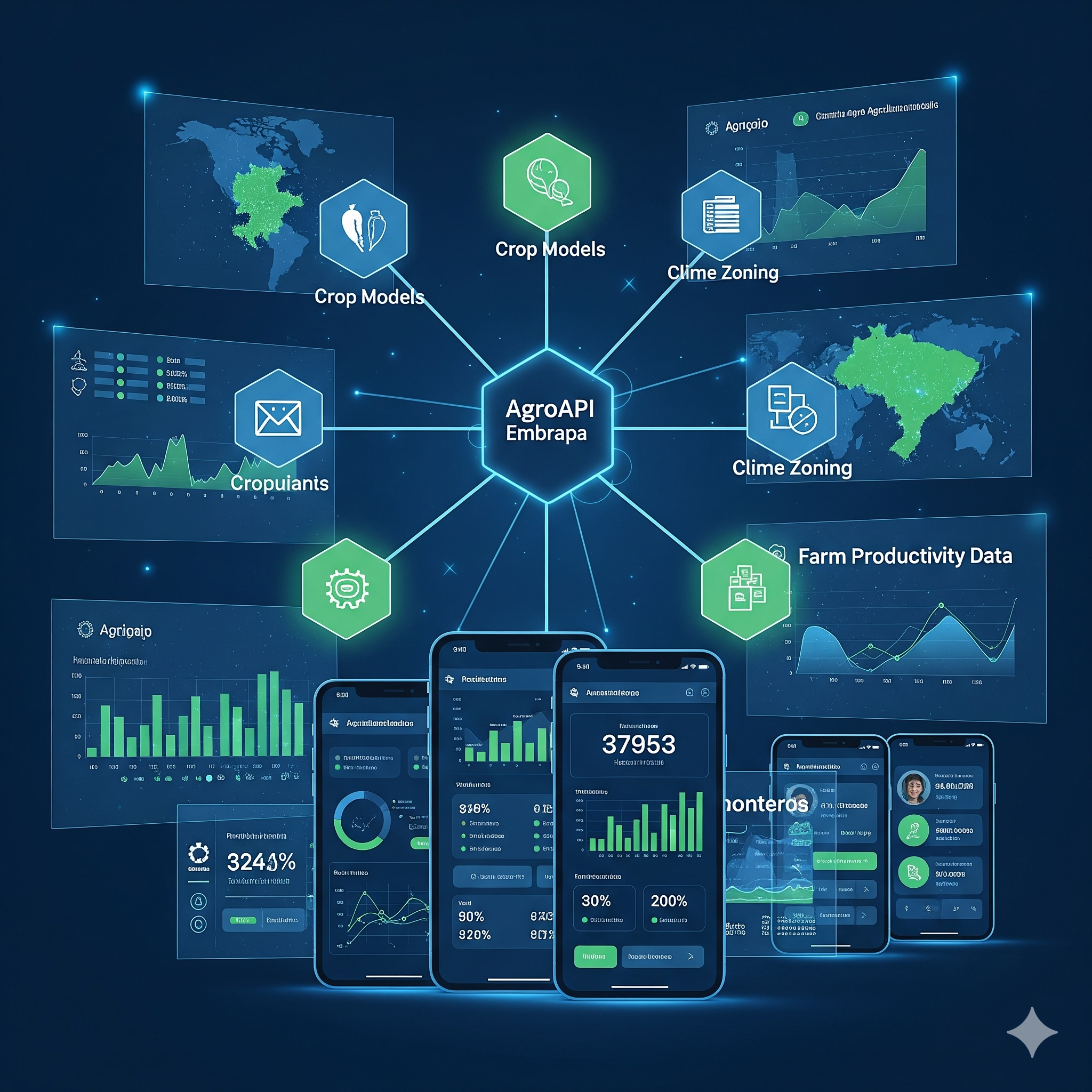
Embrapa AgroAPI: technology to boost agribusiness
APIs (Application Programming Interfaces) are software interfaces that allow different systems to communicate in an automated, fast, and secure way. In the context of digital agriculture, APIs make it possible to use scientific data and models directly within applications, management systems, web platforms, or mobile apps—without requiring users to understand complex technical details. Integration happens through simple API requests.
The AgroAPI platform, developed by Embrapa Digital Agriculture, brings together several public APIs that expose agricultural data and scientific models produced by Embrapa and its partners. The main goal is to support digital transformation in agriculture by enabling developers, startups, companies, technicians, and farmers to build data-driven solutions based on reliable scientific knowledge.
🌱 What is Embrapa’s AgroAPI service?
AgroAPI is a platform designed for the digital agriculture ecosystem, offering access to trusted agricultural data and models through standardized APIs. These services can be integrated into third-party systems to support real-time information management and decision-making in the field.
By using AgroAPI, software solutions can incorporate Embrapa’s research outputs directly into their products, reducing the need for manual data collection and processing while increasing accuracy and efficiency.
🔍 Public APIs available and their purposes
Below are some of the APIs currently available in the AgroAPI catalog (the full list can be found on the official portal):
🌾 Agritec
Provides technical information for agricultural production management, including ideal planting periods for different crops, recommended cultivars, soil correction and fertilization guidelines, and productivity estimates.
☀️ ClimAPI
Offers climate variables and risk indicators relevant to agricultural planning, supporting crop management through weather data and agroclimatic models.
🔍 SATVeg
Delivers time series of vegetation indices derived from remote sensing data, useful for crop monitoring systems and vegetation analysis.
📊 Agrofit
Supplies official information about agrochemicals registered in Brazil, including active ingredients and products used in pest and disease management. This API is especially useful for compliance and technical recommendation systems.
🧠 AgroTermos
An API for querying agricultural and scientific terminology, including synonyms, usage contexts, and translations. It helps ensure semantic consistency across agricultural information systems.
🧪 Bioinputs (Bioinsumos)
Provides structured information on agricultural bioinputs, such as biological control agents and other sustainable alternatives to conventional chemical inputs.
🧬 BlueStar Sting
An API focused on structural and physicochemical data (for example, protein data from scientific databases), supporting advanced research and integration with scientific software systems.
📚 Responde Agro!
Allows access to curated agricultural knowledge sources—such as technical texts, books, and expert answers—making it suitable for educational platforms and technical support applications.
🧪 SmartSolos and PlantAnnot
Specialized APIs for soil analysis and plant annotation, respectively. These services support soil classification systems and plant identification or characterization models.
🚜 Conclusion: benefits for technicians and farmers
The availability of public APIs through Embrapa AgroAPI represents a significant step forward in the digital transformation of Brazilian agriculture. By lowering technical barriers and integration costs, AgroAPI enables reliable scientific data to be embedded directly into digital solutions such as farm management systems, decision-support tools, AgTech platforms, and innovative agricultural applications.
For technicians and farmers, this means faster access to updated information, improved crop planning, better climate risk assessment, more accurate input recommendations, and easier regulatory compliance. Ultimately, AgroAPI contributes to higher productivity, more sustainable practices, and a stronger, more competitive agricultural sector in Brazil.